India: University Students Learn About the Persecution of Falun Dafa and China’s Forced Organ Harvesting
(Minghui.org) Around 200 students and faculty members from Christ University in Bengaluru attended three documentary screenings at the Law School, the Department of Master’s in Social Work (MSW), and the Department of Sociology on August 17, 2026, focusing on the Chinese regime’s illicit organ harvesting of prisoners of conscience. Falun Dafa practitioners in Bengaluru and volunteers from Doctors Against Forced Organ Harvesting (DAFOH) organized the events to raise awareness of the Chinese Communist Party’s (CCP) state-sanctioned forced organ harvesting from persecuted Falun Dafa practitioners and dissidents in China.
The screenings were followed by a Q&A session with a panel including Dr. Vipin P. Mudegowder, the founder and trustee of DAFOH’s India branch, and volunteers Sanjeev and Deepak.
Law Students Watch Documentary
At the Law School, students watched the documentary Hard to Believe that documents evidence of the CCP’s organ harvesting operations. During the Q&A session afterward, the students raised questions about how the legal system can prevent the Chinese Communist regime from extending its forced organ harvesting to foreign countries, whether in the form of transplant tourism or smuggling.
Nirmal, a law student, asked about the populations that were mostly targeted by forced organ harvesting operations. The panel shared that Falun Gong practitioners, Uyghur Muslims, Tibetans, and certain house Christians were the primary targeted populations.
Department of Master’s in Social Work
The MSW department screened Human Harvest, a film about how David Matas and David Kilgour—two Canadian human rights lawyers—investigated claims of the CCP’s forced organ harvesting. Students raised questions about global human rights intervention and the systematic nature of these crimes.
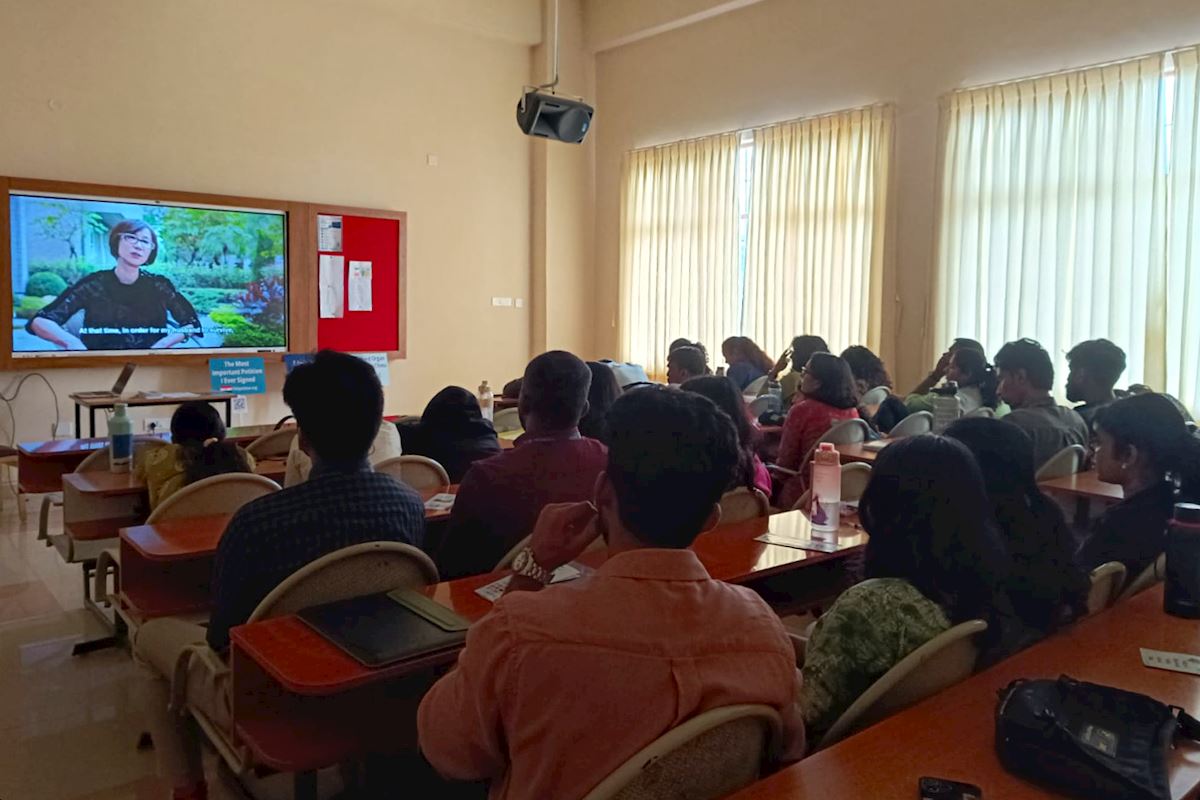
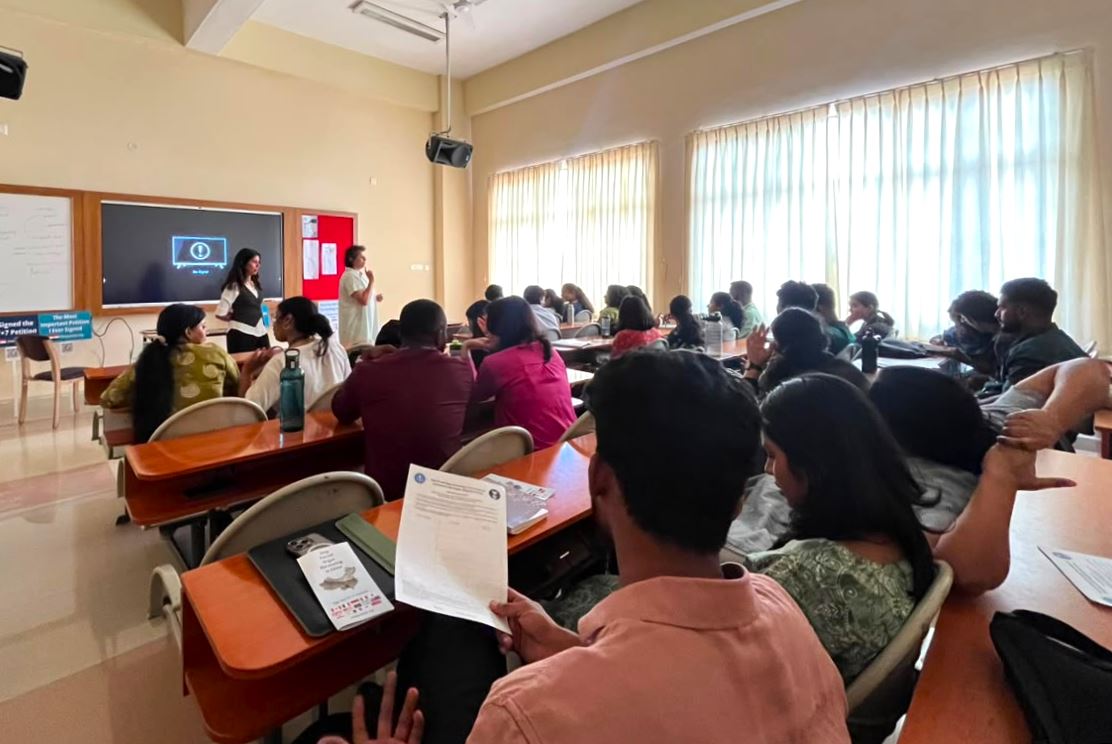 Falun Dafa practitioners and volunteers from Doctors Against Forced Organ Harvesting (DAFOH) screened the documentary Human Harvest at the Department of Master’s in Social Work, Christ University, on August 17, 2026. (Minghui.org)
Student Aleena asked whether the CCP’s main purpose is to eliminate ideological dissidents or whether it’s mainly for financial gain. The panelists explained that while illicit organ harvesting has existed on a small scale for years in China, the regime weaponized it against Falun Gong and other prisoners of conscience, simultaneously eliminating what it perceived to be an ideological threat and generating billions in revenue.
Christo, a lawyer and an advocate, asked how the petition that DAFOH globally introduced to condemn the CCP’s forced organ harvesting will help the people in China.
The panelists responded that the signatures can be recognized by their respective national governing bodies and be used to push for legislation that discourages overseas support of forced organ harvesting and punishes those involved in this barbaric practice.
Department of Sociology
The sociology department hosted a screening of Letters from Masanjia, a film that specifically focuses on the story of one man—a Falun Gong practitioner—and his experiences of being imprisoned for his faith. Part of the film was recorded using a secret camera that the practitioners smuggled into various agencies in China, including police stations. Through interviews, narrative, and the practitioner’s own pen and ink drawings, the film shows the brutal circumstances that prisoners of conscience are subjected to. Afterward, attendees also watched a short documentary on forced organ harvesting.
Students raised questions including when China’s labor camps might be closed, and what conditions detainees live under. Many wanted to know what Falun Dafa is and why it is persecuted so severely.
Panelists explained that Falun Dafa is a spiritual practice based on the principles of Truthfulness, Compassion, and Forbearance, and the CCP views its popularity and moral values as a threat to its totalitarian control.
One student asked whether Falun Gong was considered a “successful social movement” as the CCP’s suppression has failed to eliminate the group.
The panel explained that Falun Dafa is not an organization but that practitioners voluntarily come together to share information and raise awareness, but there is no central leadership. Therefore, success cannot be measured in conventional terms of a movement defeating a state. Instead, it is about individuals’ beliefs and basic human rights.
Benjamin, a first-year Sociology student, asked why Falun Gong was considered such a threat to the Chinese Communist Party. He wanted to know what makes it so difficult for the Chinese government to accept Falun Gong.
The panel explained that Falun Gong is a spiritual practice based on Truthfulness, Compassion, and Tolerance, and practitioners strive to align their lives with these principles, often experiencing profound personal transformation. Falun Gong was introduced in China in 1992 and spread rapidly. Within seven years, the government estimated that around 100 million people were practicing, compared to 60 million CCP members. The sheer number of practitioners was seen by the Party as a threat to its control.
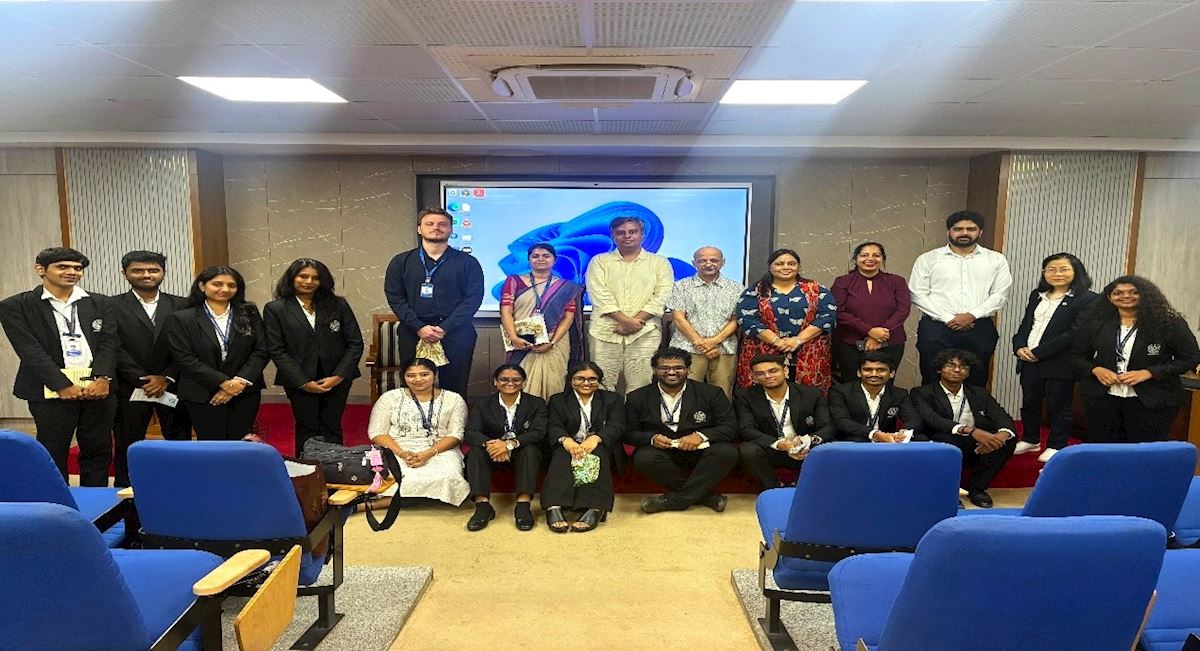 Attendees pose for a group photo after the documentary screening at the Department of Sociology, Christ University, Bengaluru, India on August 17, 2026. (Minghui.org)
Many of the film screening attendees signed the petition calling for an end to forced organ harvesting of Falun Gong practitioners and other prisoners of conscience after watching the documentaries.
Students Express Gratitude After Learning About a Global Issue
Nirmal Ananad, a Sociology student, thanked Falun Dafa practitioners after the Q&A session, “It’s our pleasure to host this documentary screening and panel discussion with DAFOH. We learned a lot and gained a lot of valuable insights after listening to the panelists.”
Student Gauri Priya Nair added, “We’re really grateful that you reached out to us and gave us the opportunity to be exposed to these important conversations and perspectives.” She was interested in learning more about the forced organ harvesting and persecution of Falun Dafa, and said she hoped to continue collaborating with DAFOH and Dafa practitioners on future events.